
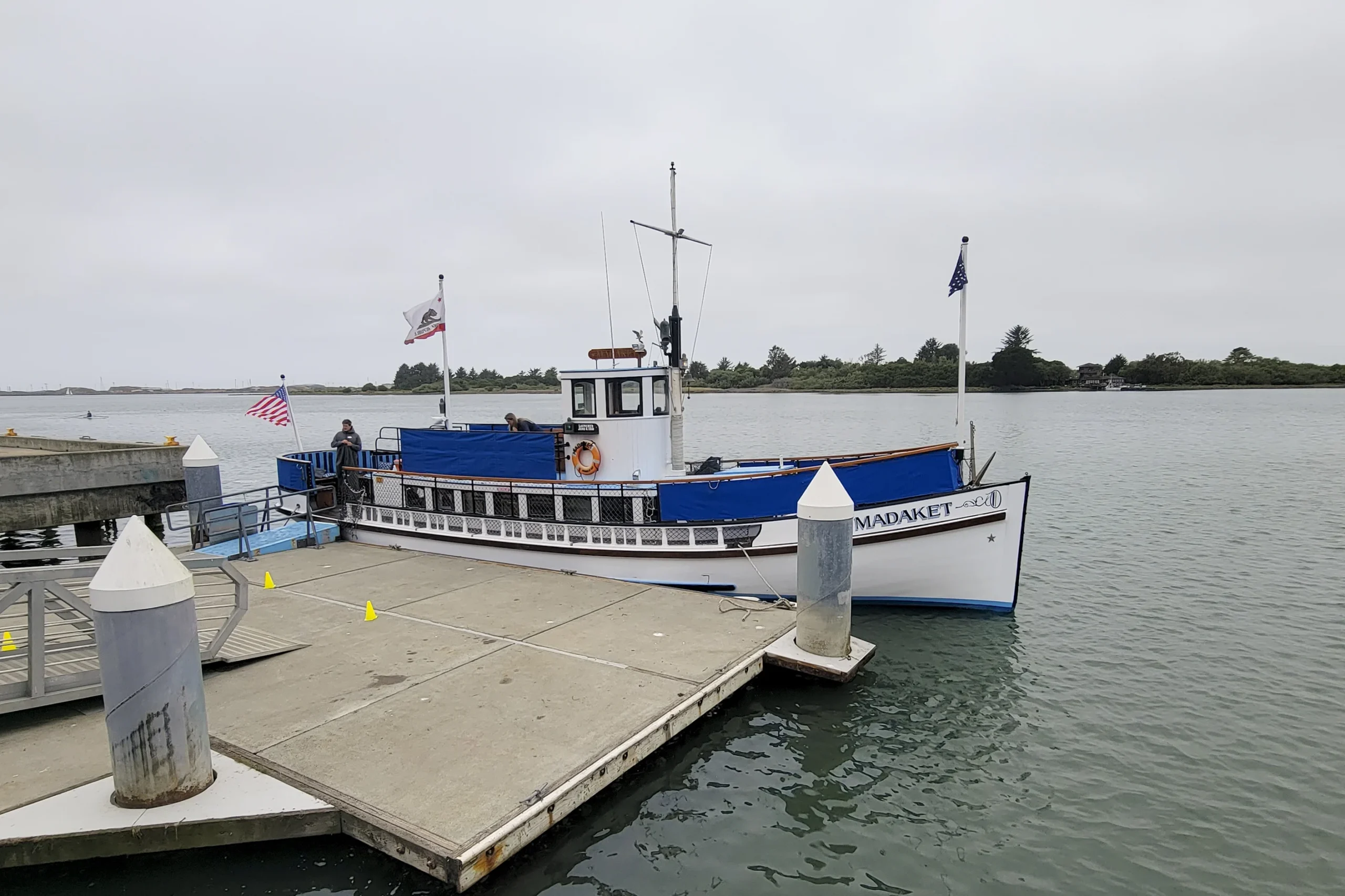

The M.V. Madaket is a 1910 passenger ferry that runs narrated cruises on Humboldt Bay from the foot of C Street in Old Town Eureka, California. It is the oldest passenger vessel in continuous service in the United States, and it carries what is reportedly the smallest licensed bar in the state.
The narrated Madaket cruise runs about 75 minutes. There’s also a shorter cocktail cruise that isn’t narrated. Take the narrated one — the history is the reason to go.
The Madaket is the last survivor of seven ferries that carried mill workers and their families around Humboldt Bay through the height of the timber industry. That work ended in 1972, when the Samoa Bridge opened and made the crossing unnecessary. She’s been running sightseers ever since.
If you’re spending time in the redwood parks, this is the best non-forest half day in the area, and it fills in the human history that the groves don’t.
Cruise Facts
- Vessel: M.V. Madaket, built 1910, refurbished 1989
- Departs: Foot of C Street, Old Town Eureka
- Narrated bay cruise: About 75 minutes
- Cocktail cruise: About 1 hour, not narrated
- Season: Roughly mid-May through the first week of October
- Operated by: Humboldt Bay Maritime Museum
- Phone: (707) 445-1910
- Dogs: Allowed — this is one of the more dog-friendly attractions in the area
Book ahead in summer. The boat is small, and sailings fill.
Dress for the bay, not the forecast. Humboldt Bay runs gray, damp, and windy through the summer, and it’s colder on the water than on the dock. Our July cruise was fully overcast — which, for photographs of a working waterfront, is not a bad thing at all.
What You See from the Water
Old Town Eureka
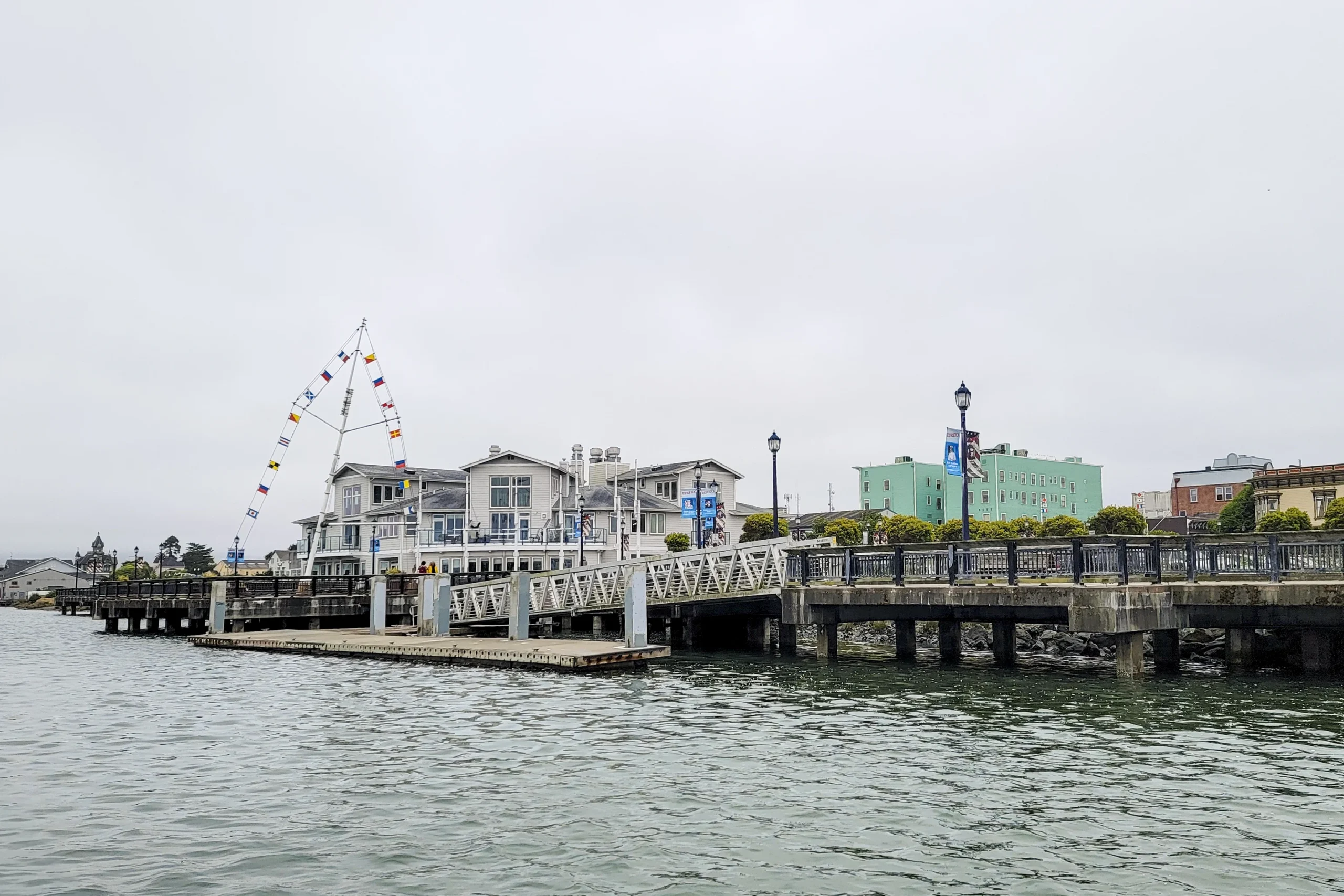
The Eureka waterfront, Madaket cruise dock, and boardwalk seen from Humboldt Bay
The boat pulls away from the C Street dock and the whole Victorian waterfront lines up behind it. Eureka got rich on redwood in the second half of the nineteenth century, and the architecture is the receipt — this is one of the most intact Victorian townscapes on the West Coast.
The Carson Mansion
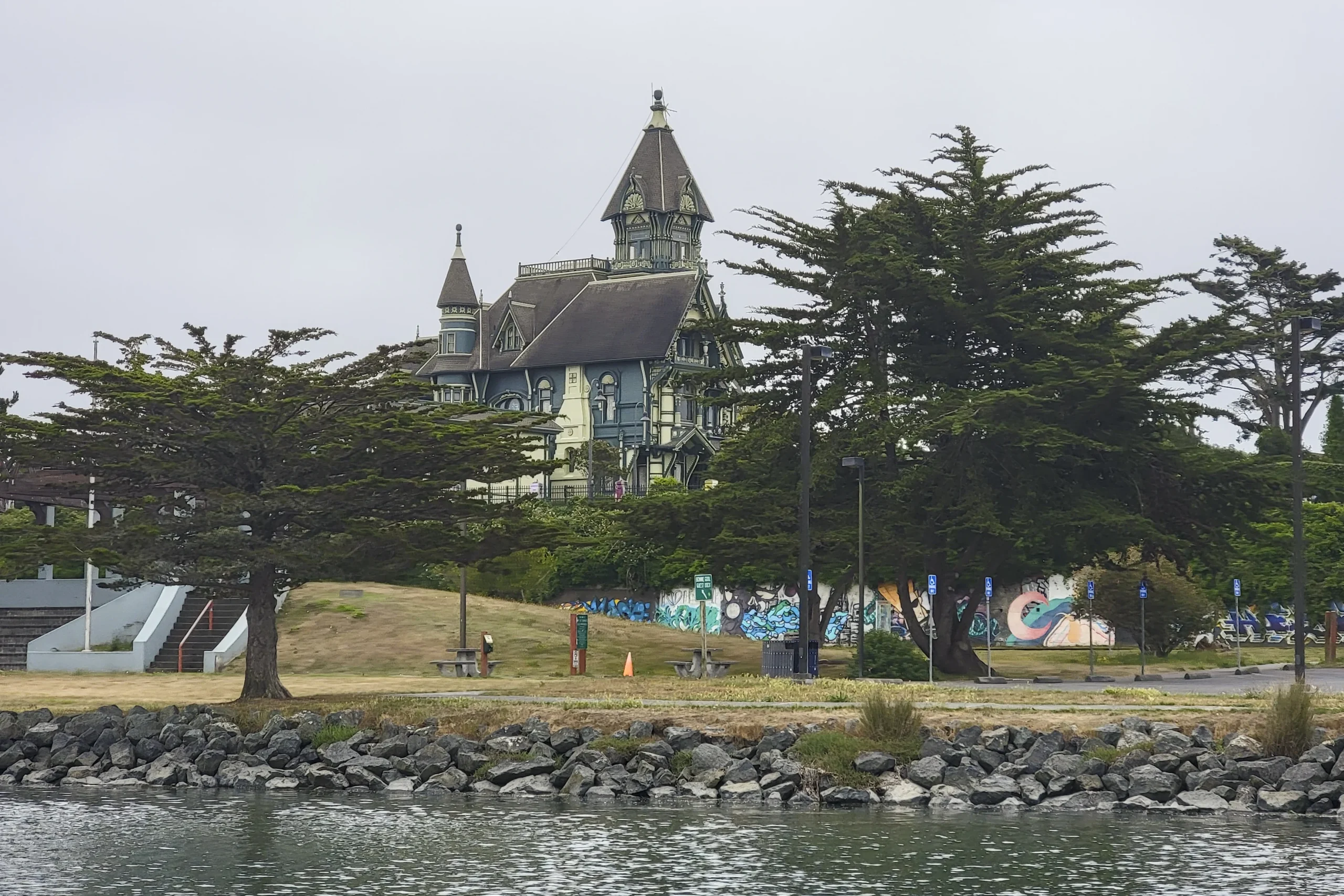
The Carson Mansion in Eureka seen from Humboldt Bay
The most photographed Victorian in California, and arguably in the country. William Carson built it between 1884 and 1886 with lumber-baron money and, reportedly, with mill crews he wanted to keep employed during a slow stretch.
You can’t go inside. Since 1950 it has housed the private Ingomar Club, and there are no public tours. The view from the water is one of the better looks you’ll get at it, and it’s a good deal easier than trying to photograph it from the street.
Woodley Island and the Lighthouse
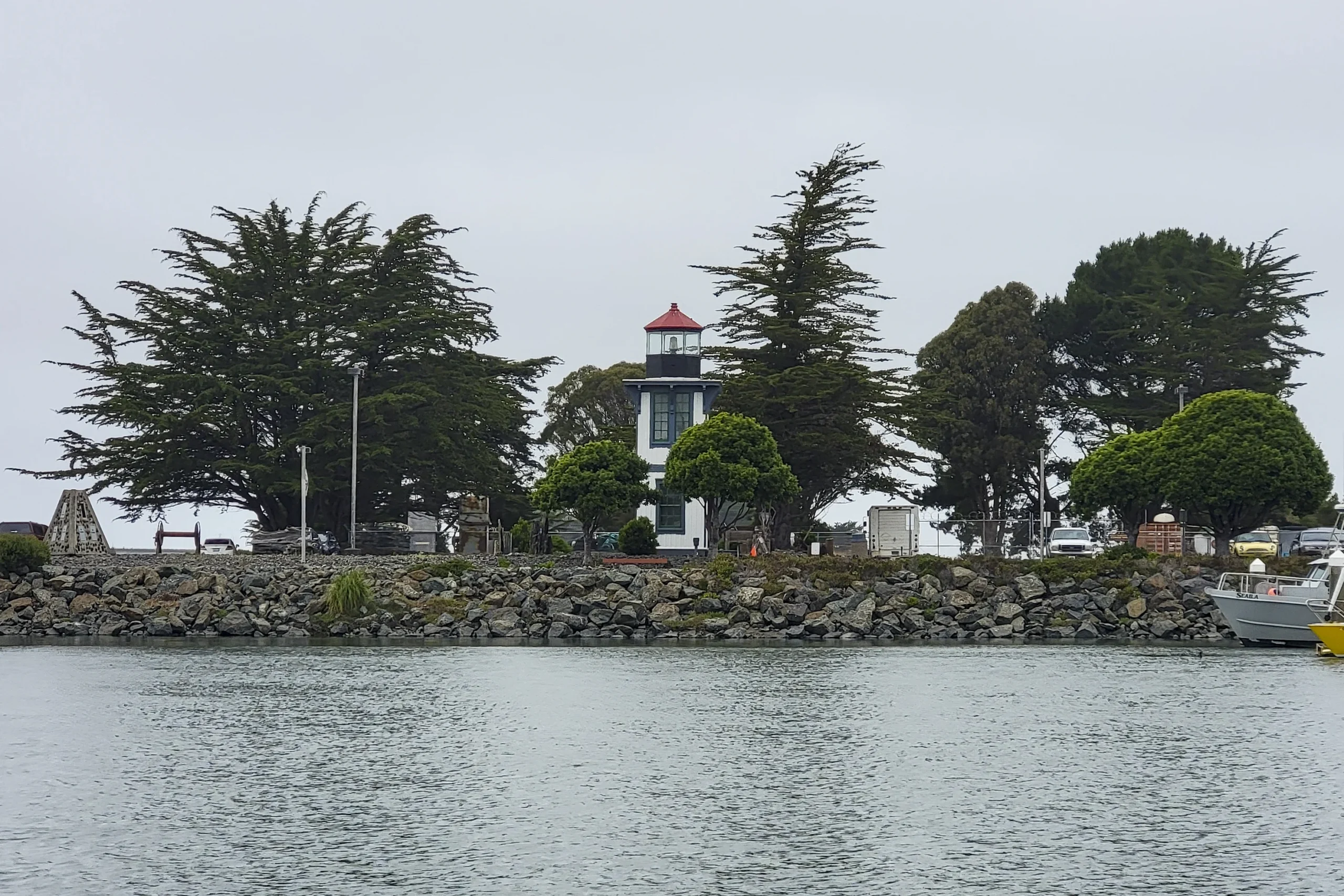
The relocated Table Bluff Lighthouse at Woodley Island Marina, Eureka
The small white lighthouse at Woodley Island Marina isn’t native to that spot. It’s the Table Bluff Lighthouse, built in 1892 south of the bay entrance, deactivated in 1975, and moved here in 1987 to save it. Its original Fresnel lens is at the Humboldt Bay Maritime Museum near the Samoa Cookhouse.
Working Shoreline and Wildlife
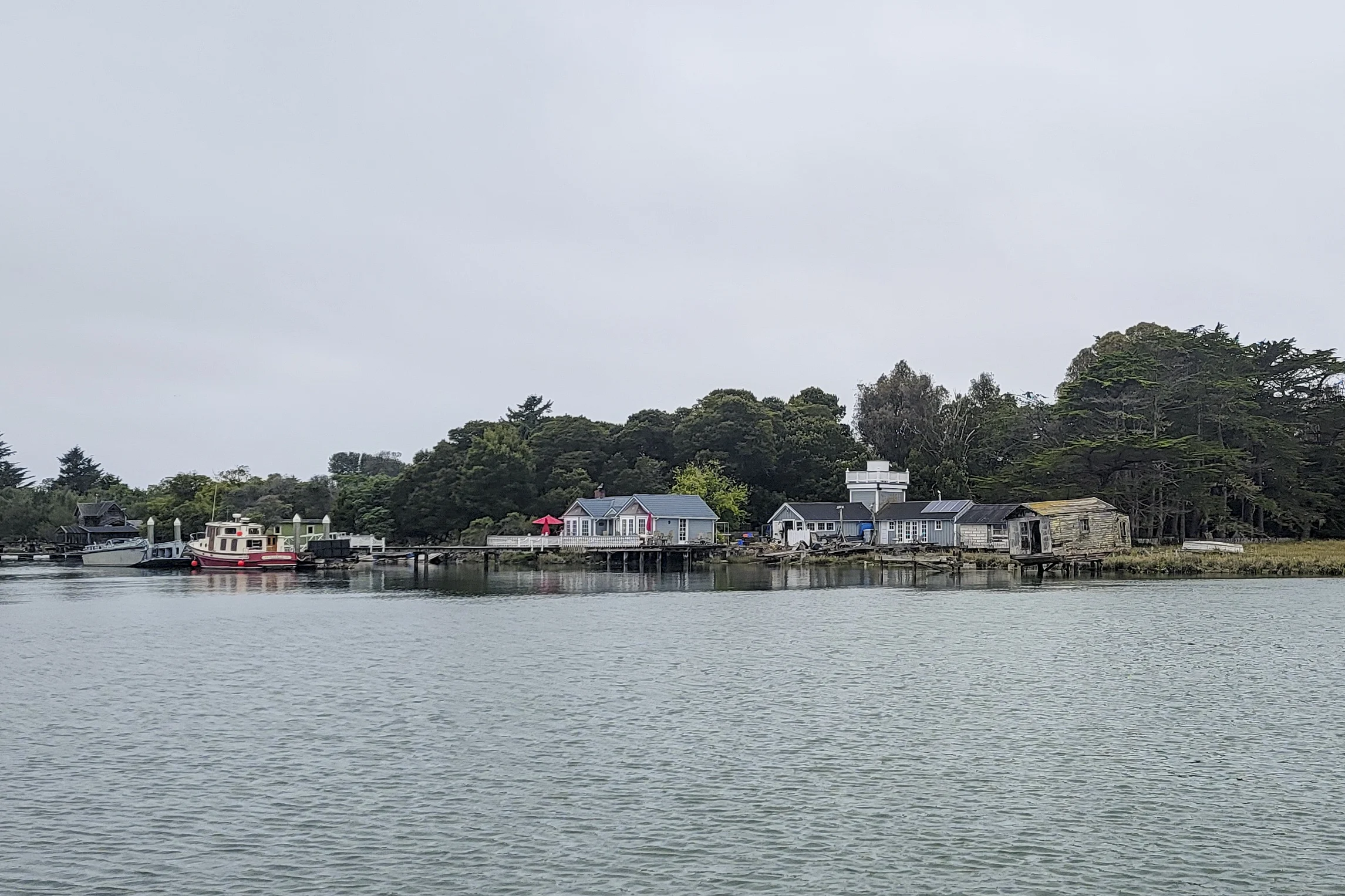
Homes and boats along the Humboldt Bay shoreline
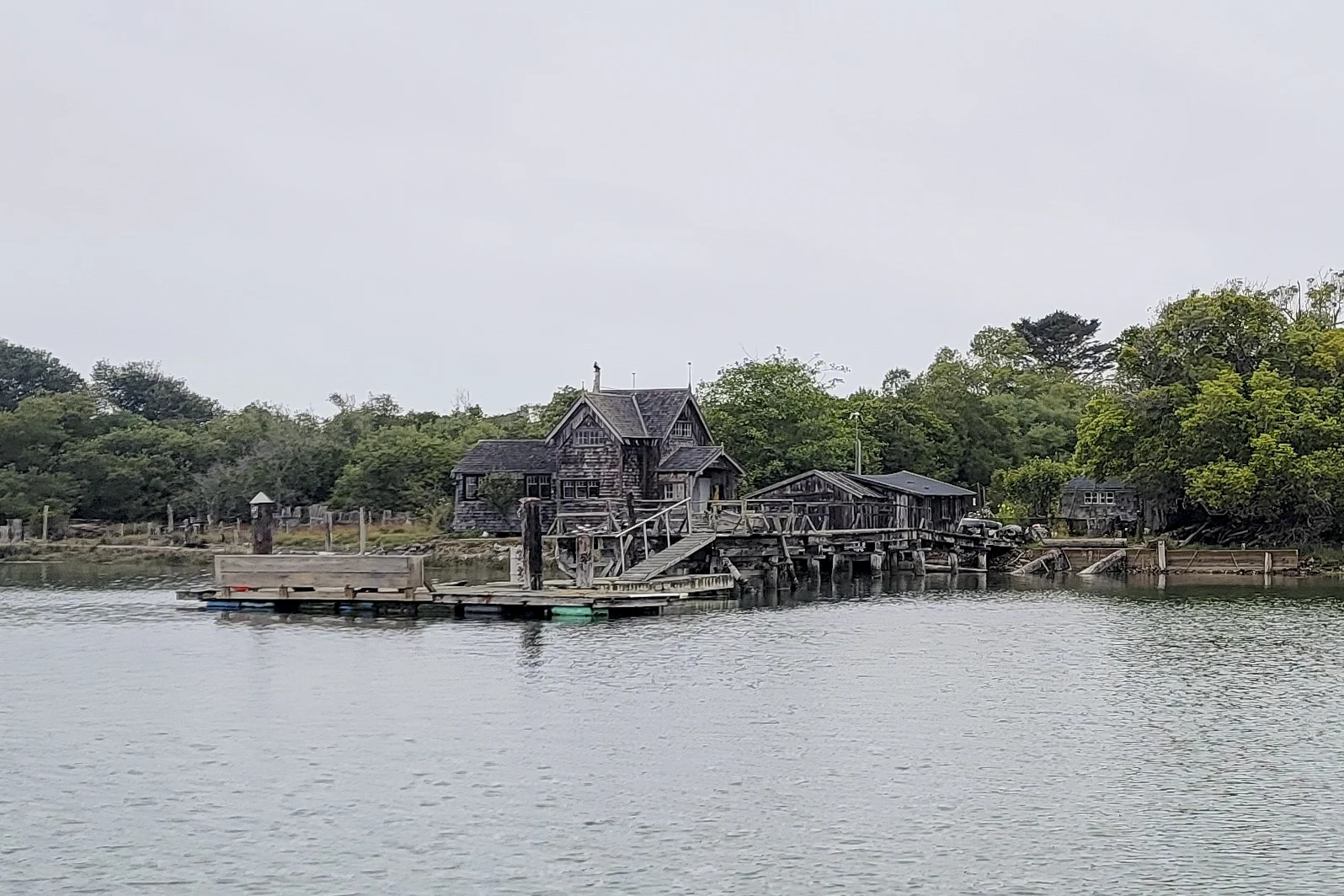
A weathered shingled house standing on pilings above Humboldt Bay
Much of the bay shoreline is still working, or was until recently — pilings, boat sheds, and houses built out over the water on posts, weathered down to bare silver wood. It’s a completely different register from the polished Victorians a few hundred yards away, and it’s the part of the cruise that photographs best.
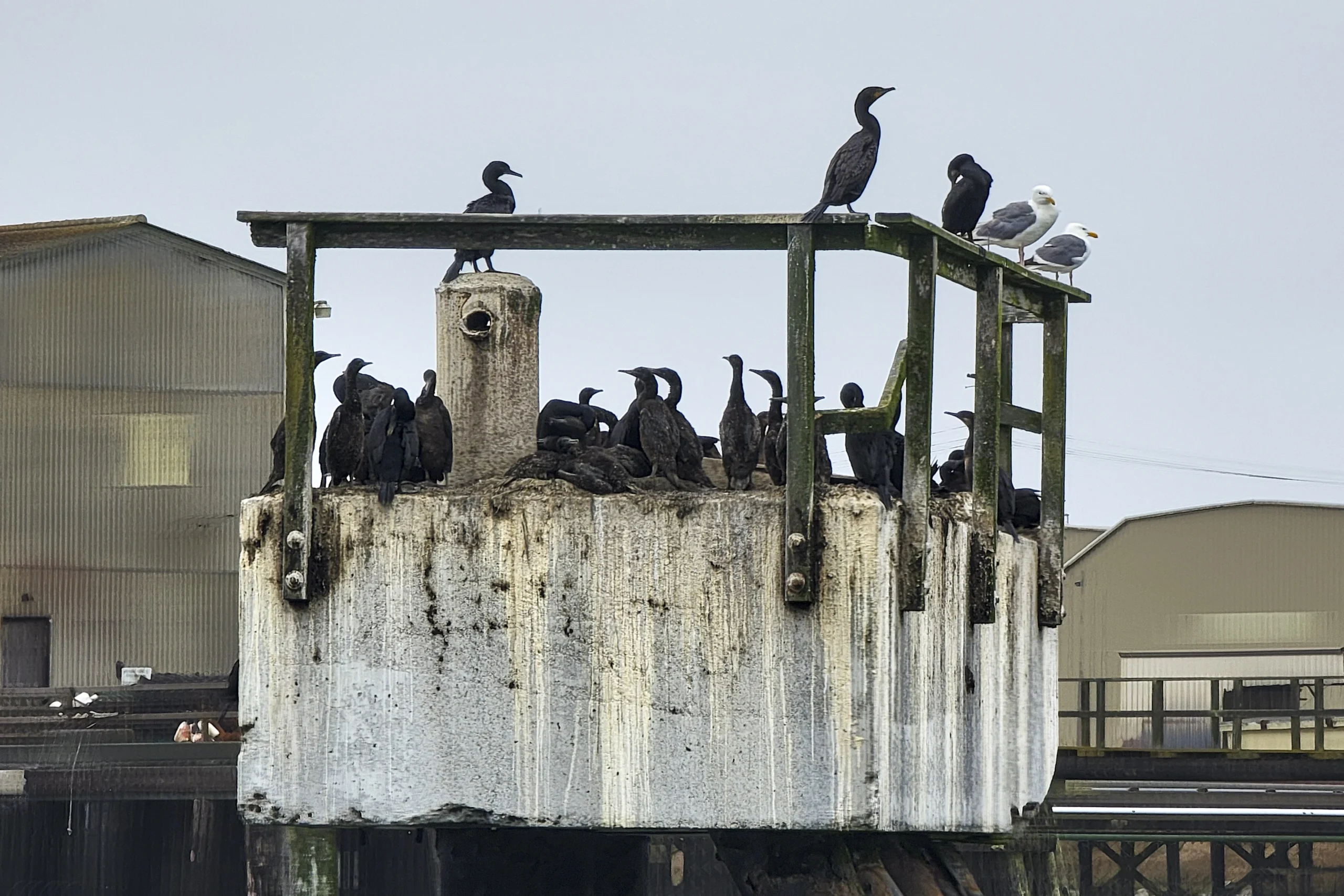
Cormorants and gulls roosting on a piling in Humboldt Bay
The old pilings and dolphins have been thoroughly claimed. Double-crested cormorants pack them shoulder to shoulder with gulls holding the upper rails. Harbor seals, pelicans, herons, and egrets are all common on the bay, and the captain will point them out.
Tuluwat Island
The largest island in the bay is Tuluwat, also called Indian Island, and its history is the most important thing the cruise narration covers.
Tuluwat is the spiritual center of Wiyot culture and the site of the tribe’s World Renewal Ceremony. On February 26, 1860, during the final nights of that ceremony, settlers and vigilantes from Eureka crossed the bay in the dark and killed the Wiyot people who remained on the island — overwhelmingly women, children, and elders. Estimates of the dead range from roughly 80 to 250.
A young Bret Harte was working at the Northern Californian in nearby Union, now Arcata. With his editor out of town, he published a scathing account on February 29 — “a more shocking and revolting spectacle never was exhibited to the eyes of a Christian and civilized people” — and had to flee to San Francisco under threats on his life.
The land was taken afterward and stayed out of Wiyot hands for close to 160 years.
In October 2019 the City of Eureka returned more than 200 acres of Tuluwat to the Wiyot Tribe by unanimous city council vote — the first time a U.S. municipality transferred a parcel of that size to a tribe without a sale, a lawsuit, or a court order. The Wiyot had already bought back a small parcel in 2000 and spent years cleaning contamination off it before resuming the World Renewal Ceremony in 2014.
You see the island from the water. It isn’t visually striking, it’s low, green, and quiet. But, knowing what happened there changes the rest of the Madaket cruise.
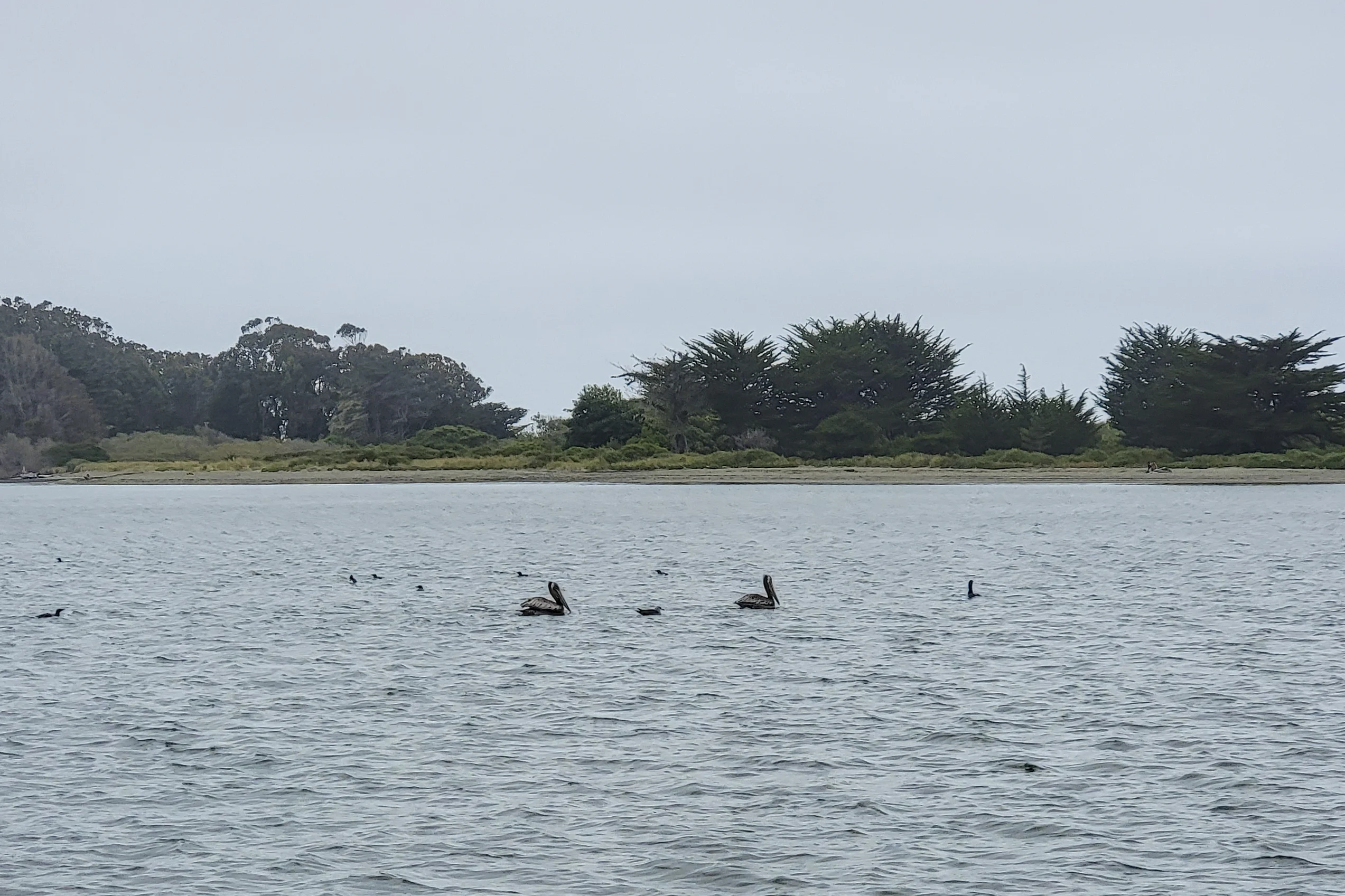
Tulawat Island on Humbolt Bay, California
Photography Notes
- Overcast is the normal condition and it suits the subject. Grey light is right for a working waterfront, weathered pilings, and dark birds on white-streaked concrete.
- Bring a longer lens. The best subjects — the Carson Mansion, the lighthouse, the cormorants — are all across water and you can’t step closer.
- Shoot from the stern. Less vibration than near the engine, and you get the wake and the receding shoreline together.
- Watch your horizon. Everything is shot from a moving boat and a tilted waterline is very obvious in a frame with this much flat water.
- The light gets better late. An evening sailing gives you low light on the Victorians as you come back in.
Know Before You Go
- Season is roughly mid-May to early October. Confirm sailings before you build a day around it.
- Layers, always. Wind on the water plus summer fog.
- Old Town Eureka is walkable from the dock and worth an hour before or after — the Victorian district is the reason to be here.
- Combine it with the redwood parks. Eureka sits between Humboldt Redwoods to the south and Redwood National and State Parks to the north, and it’s the most practical base for both.
- The Samoa Cookhouse across the bay is the other local institution worth knowing about — the last surviving cookhouse from the lumber camp era, still serving family-style.
Is It Worth It?
Yes, and it’s the stop I’d add to a redwoods trip if you have a spare afternoon and mixed weather.
Seventy-five minutes on a 1910 ferry gets you the Victorian waterfront, the Carson Mansion from the only angle that really works, a relocated lighthouse, a great deal of wildlife, and the history of Tuluwat told plainly by someone who lives there. After several days of walking under very large trees, the change of scenery is welcome.
The honest caveat is that this is a low-key harbor cruise, not a wildlife tour or a thrill ride. Go for the history and the boat itself.
For schedules, tickets, and current sailings, contact the Humboldt Bay Maritime Museum at (707) 445-1910.
0 Comments