
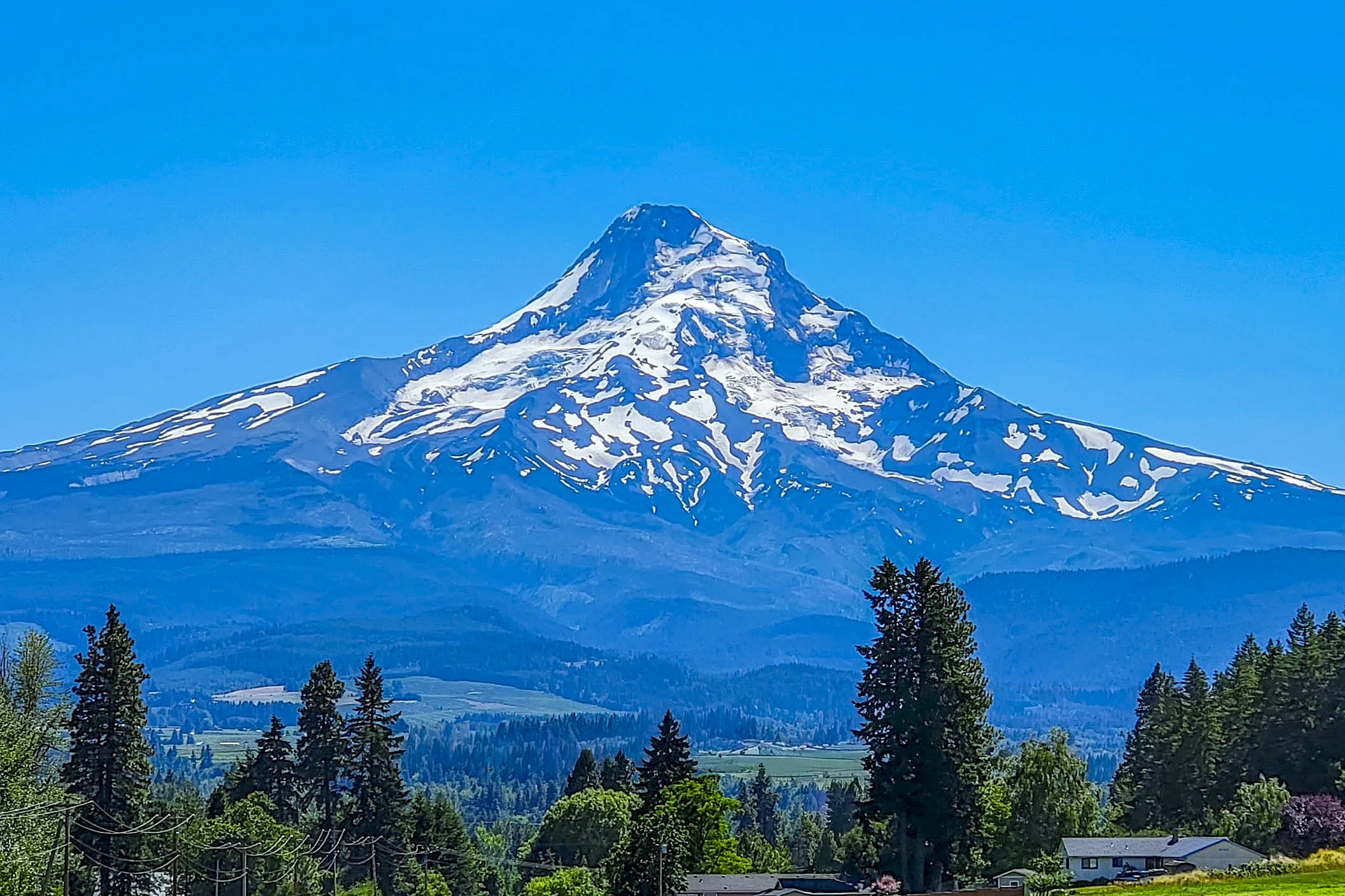

The Mount Hood Scenic Byway is a 105-mile (169 km) loop from Portland, Oregon that runs east through the Columbia River Gorge, turns south through the Hood River Valley, and climbs around Mount Hood — at 11,245 feet (3,428 m), Oregon’s highest point. Six miles up a spur road from Government Camp it delivers you to Timberline Lodge, a 1937 Works Progress Administration building at 6,000 feet (1,829 m) that is a National Historic Landmark and, as it happens, the exterior of the Overlook Hotel in The Shining.
You can drive the loop in about two hours without stopping. We took an afternoon over it and still felt rushed.
One thing to know going in: the mountain and the Gorge get bundled together in most itineraries, and they shouldn’t be. The Columbia River Gorge is the river canyon. Mount Hood is a volcano forty miles south. The byway connects them, which is why they end up on the same day, but they’re separate destinations with separate weather.
The Basics
- Route: 105 miles (169 km) — I-84 east through the Gorge, Highway 35 south through the Hood River Valley, US 26 west back to Portland
- Driving time: About 2 hours without stops; a full day with them
- Timberline Road: 6 miles (9.7 km) up from Government Camp, paved, open year round
- Timberline Lodge elevation: 6,000 ft (1,829 m)
- Mount Hood summit: 11,245 ft (3,428 m)
- Barlow Pass: 4,155 ft (1,266 m) — where the Oregon Trail crossed the Cascades
- Fee: No fee to visit the lodge or drive the byway
- Sno-Park permit required November 1 through April 30 to park at Timberline and other winter recreation areas
- Lodge: Open to the public. You can walk in, look around, eat, and leave without staying.
The Sno-Park rule is the one that trips people up, and it’s the same pattern as Mount Spokane — free most of the year, permit required in winter, and the switch is by calendar date rather than by snow.
Driving the Byway
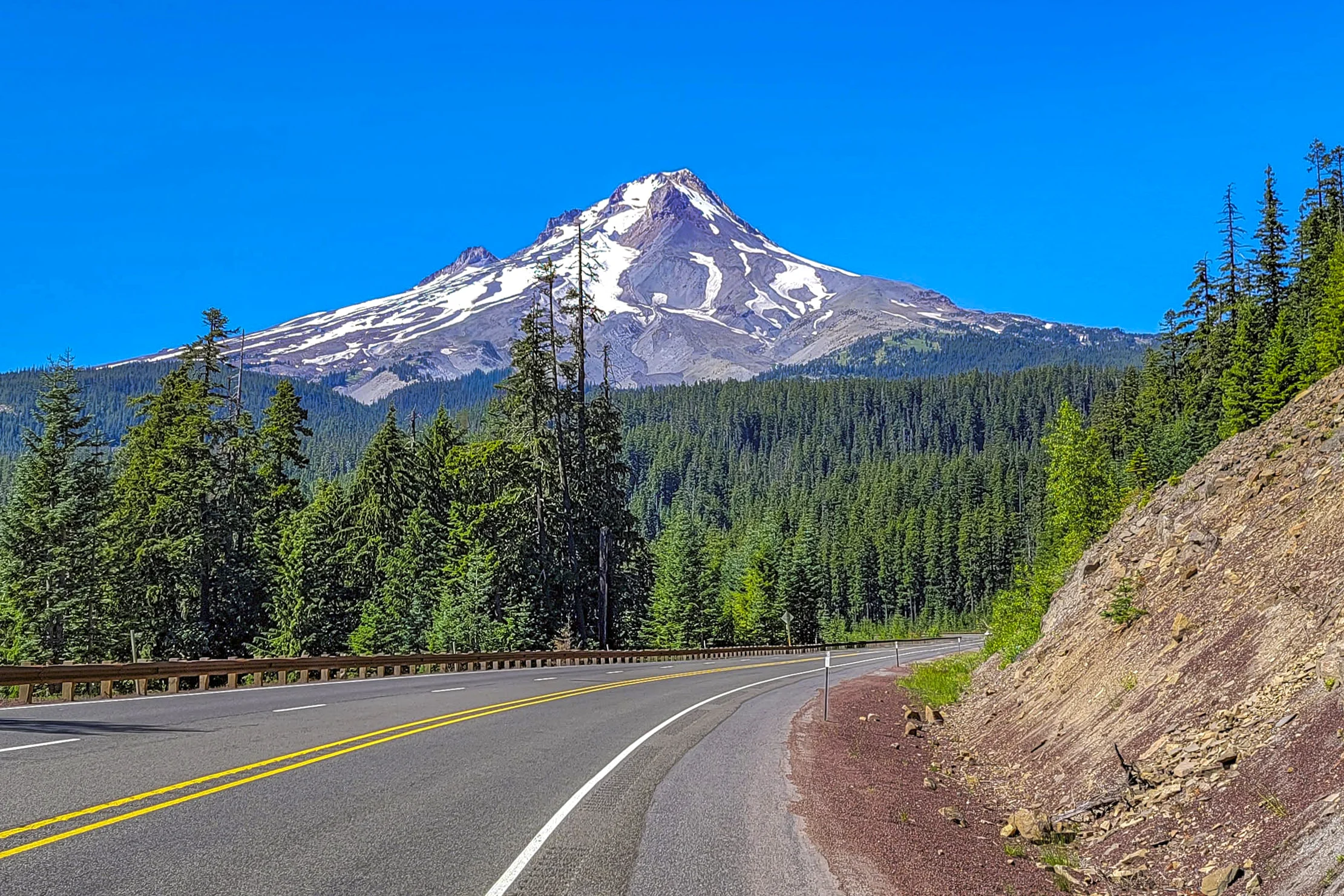
The mountain does something unusual on this drive: it keeps changing shape. From the Hood River Valley on the north you get the classic sharp pyramid above orchards and farmland. Come around to the south side and it broadens, the glaciers spread out, and the summit turns into a set of jagged points.
Same mountain, ninety minutes apart, and it doesn’t look related to itself.
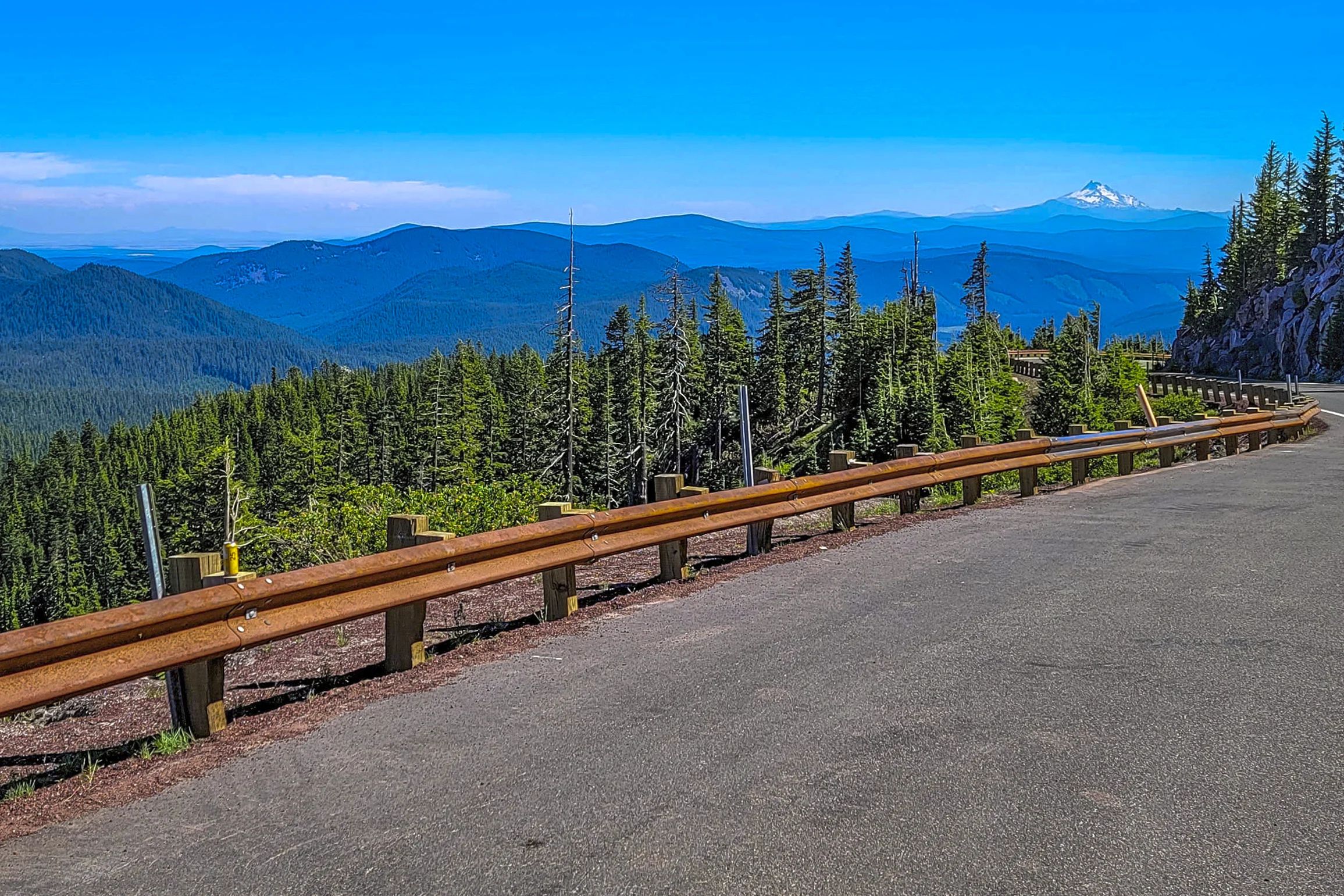
The pullouts on the south side look away from Hood and out over the Cascades, with Mount Jefferson on the horizon about forty miles south. It’s the second-highest peak in Oregon and it shows up in a surprising number of frames from this drive.
Barlow Pass, at 4,155 feet, is the historical heart of the route even though there’s not much to see. This is where the Oregon Trail crested the Cascade Range — the last barrier before the Willamette Valley, and the alternative to rafting the Columbia. Hold that thought; it comes back inside the lodge.
Timberline Lodge
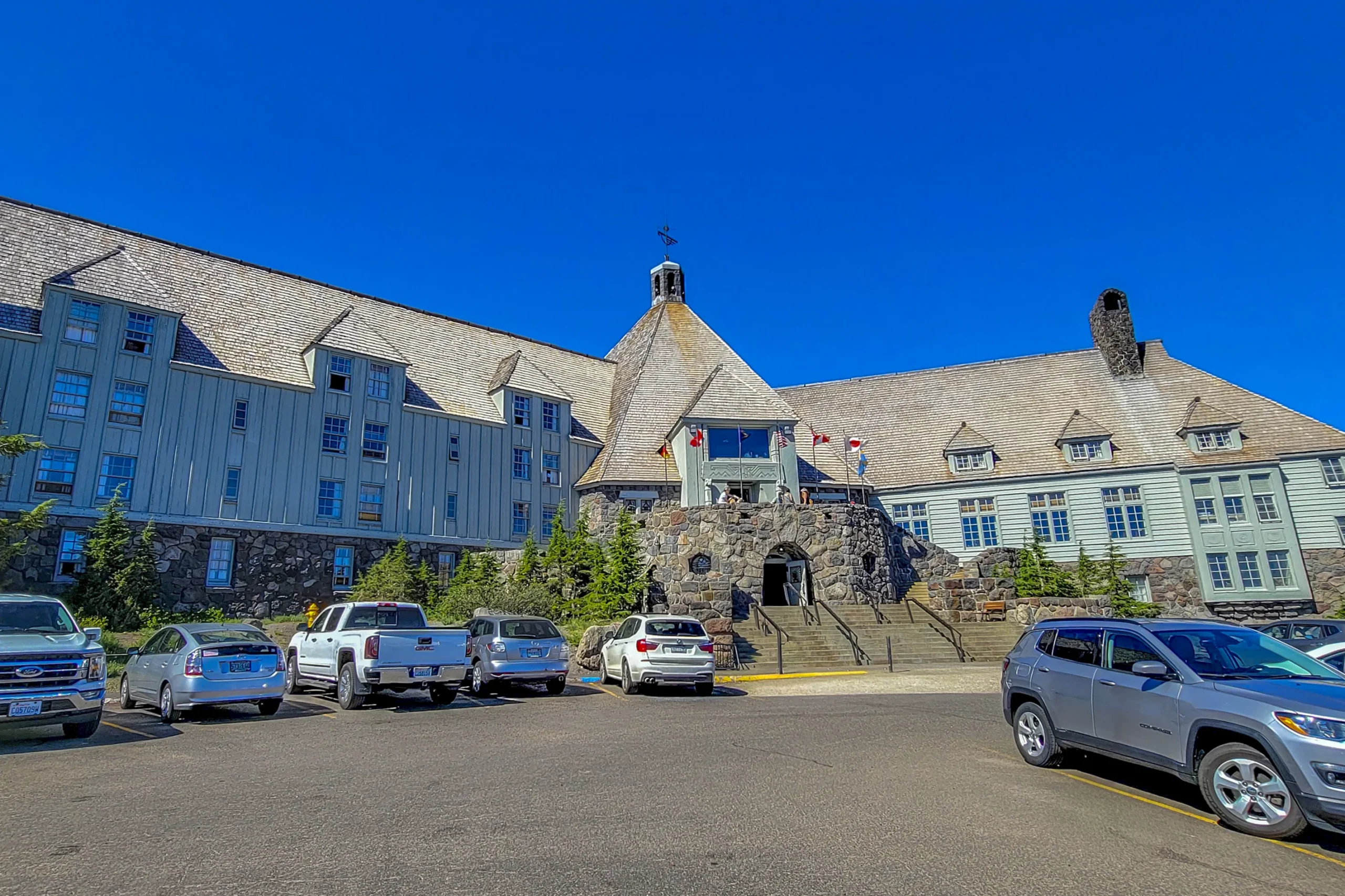
Built between 1936 and 1938 by the Works Progress Administration, and dedicated by President Franklin D. Roosevelt on September 28, 1937, Timberline Lodge was a Depression-era jobs program that happened to produce a masterpiece.
It’s a four-story building of massive timbers and local stone, organized around a central hexagonal headhouse, in what gets called Cascadian or Northwest rustic style. Timberline Lodge became a National Historic Landmark on December 22, 1977.
You don’t need to be a guest. The lodge is open to the public, there’s no fee, and walking in off the parking lot to look at the building is entirely normal and expected.
Timberline Lodge — The Building Is the Art
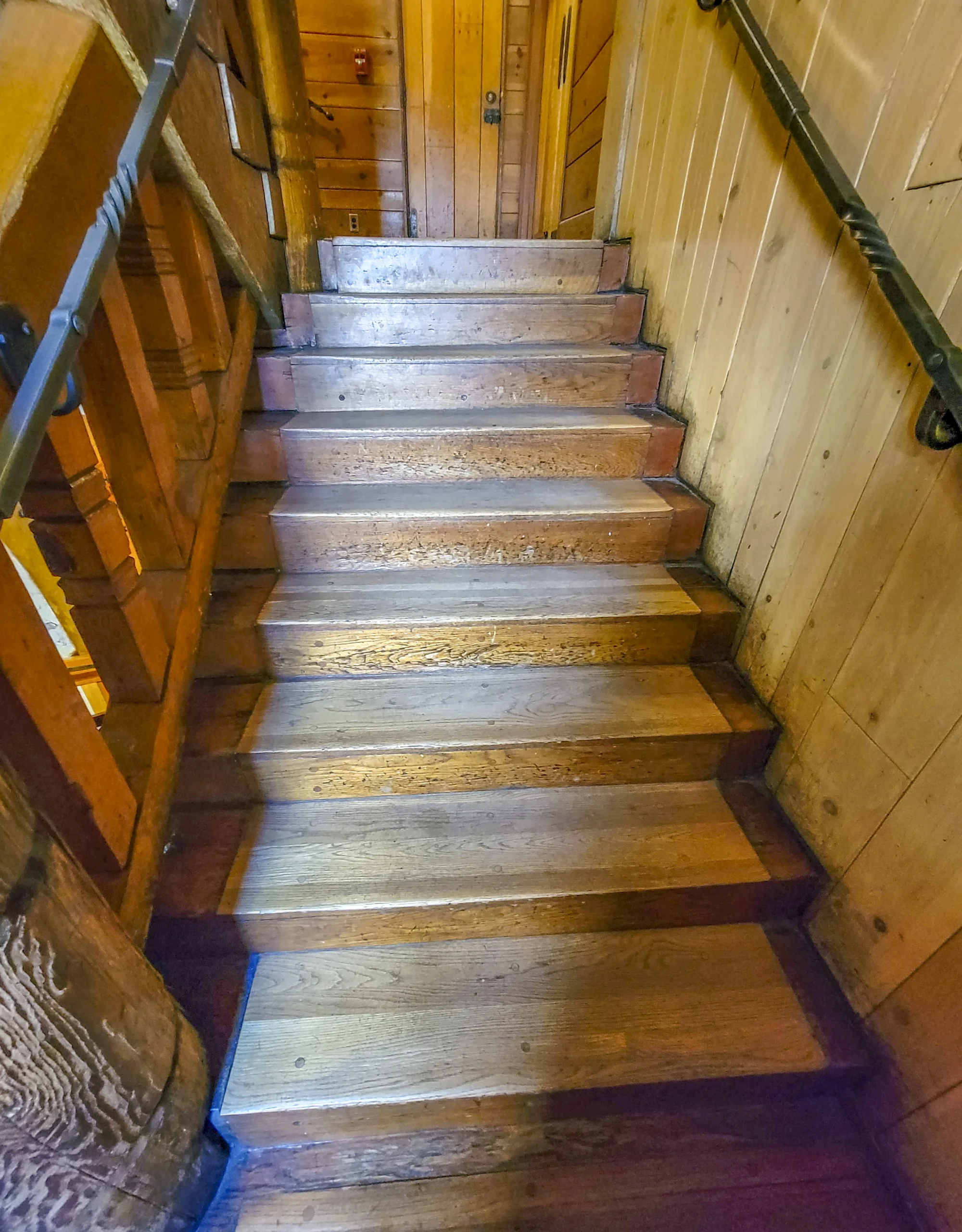
Everything you touch inside was made by hand, on site, by out-of-work craftspeople.
The stair treads are worn into shallow curves by ninety years of ski boots. The ironwork was forged locally. The fire andirons were made from railroad track. There are more than 130 paintings and watercolors hanging in the building.
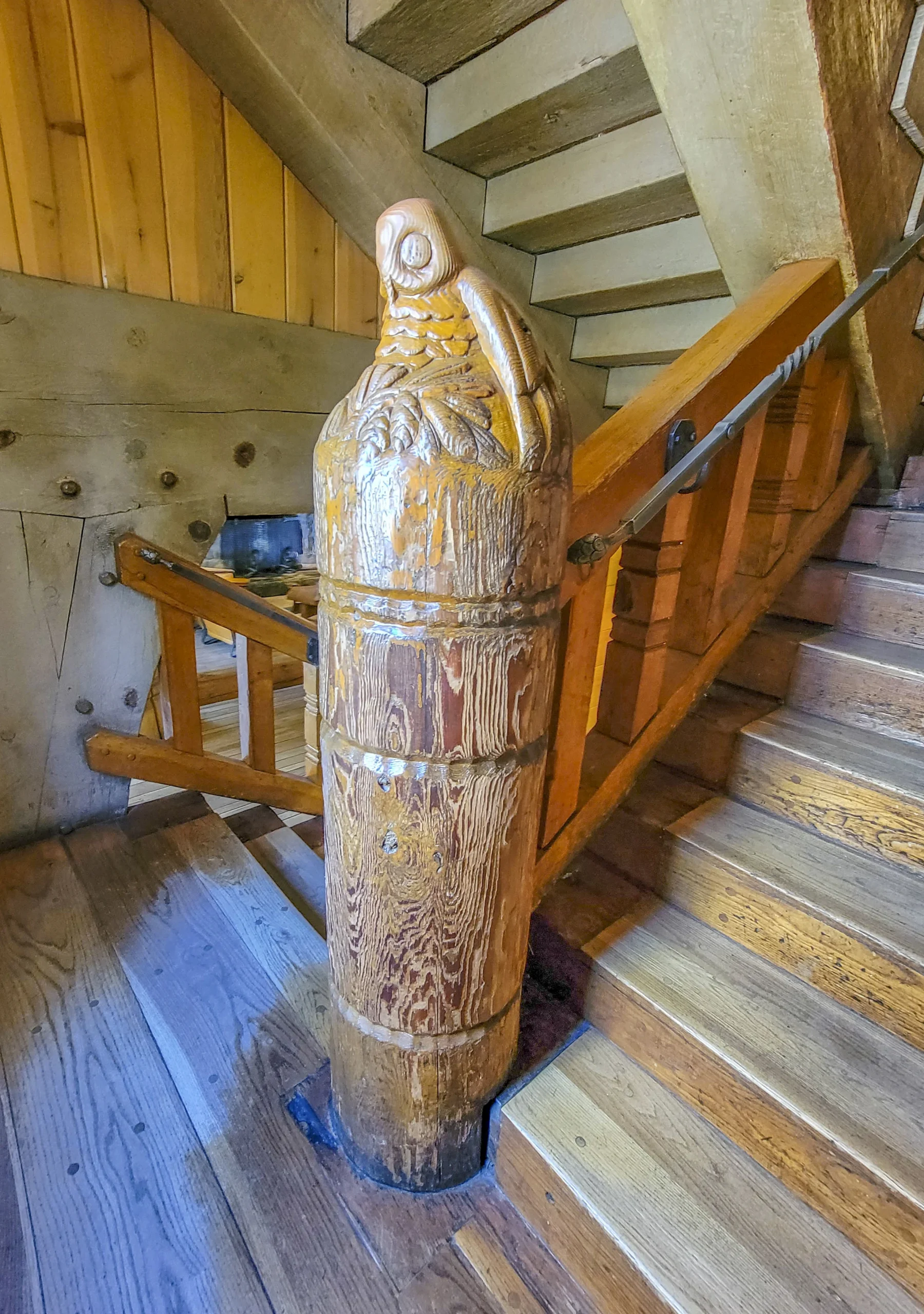
The newel posts are the detail worth going for. They were carved from discarded cedar telephone poles — chosen deliberately, because the wood was well seasoned and weathered and its grain took a chisel well. Each one is topped with an animal native to the mountain: badgers, beavers, bears, birds.
They were designed by Florence Thomas and Ray Neufer and cut by woodcarvers of the Federal Art Project.
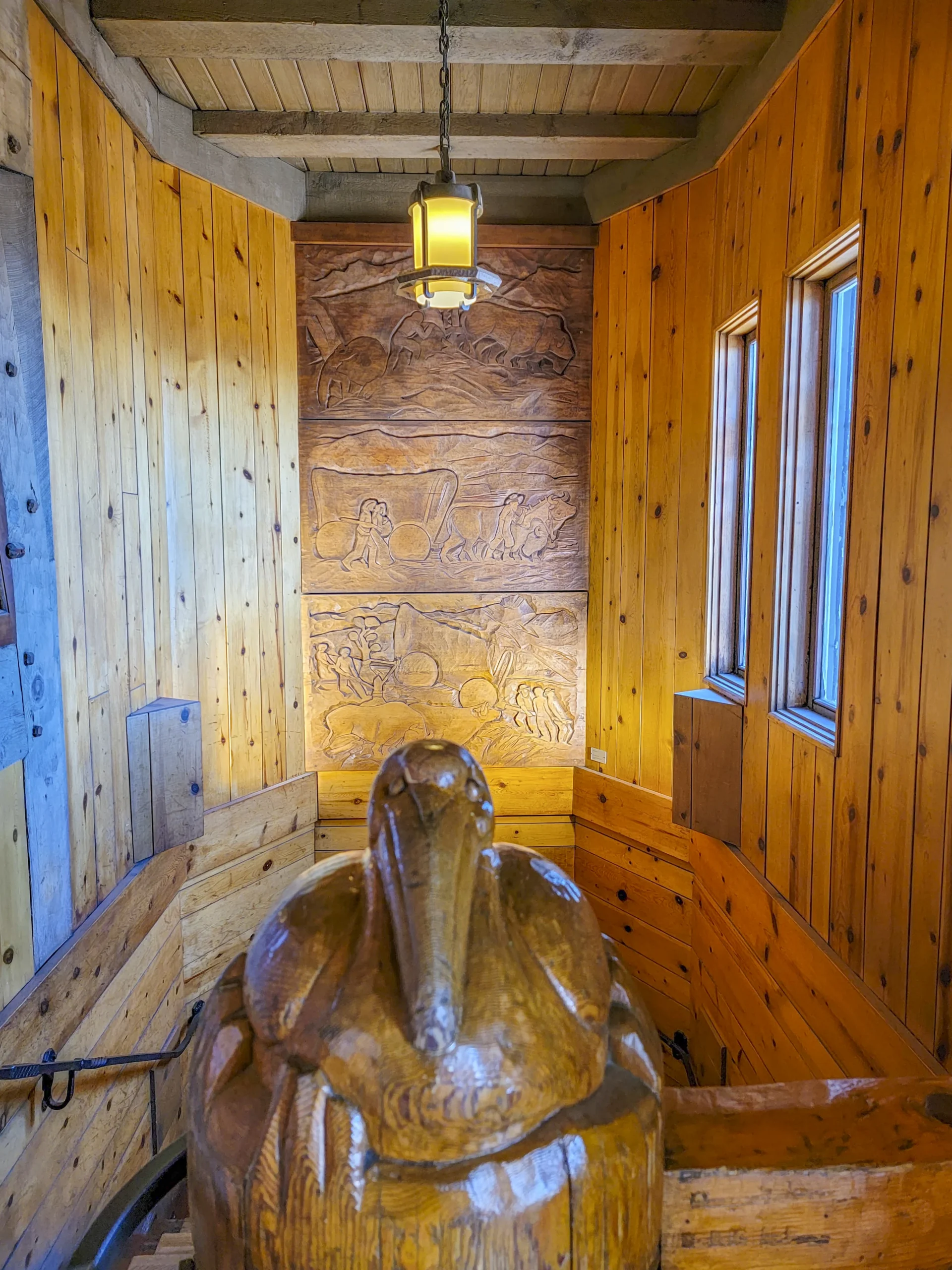
And here’s where Barlow Pass comes back. The relief panels carved into the redwood behind one of the posts show the Oregon Trail — wagons, oxen, families walking beside them.
Thirty minutes down the road is the actual pass where that crossing happened. The people who carved these panels in 1937 were a lifetime closer to it than we are, and they were putting it on the wall of a building paid for by a federal jobs program during a different kind of hard passage. It’s a lot to find on a staircase.
Skiing in July
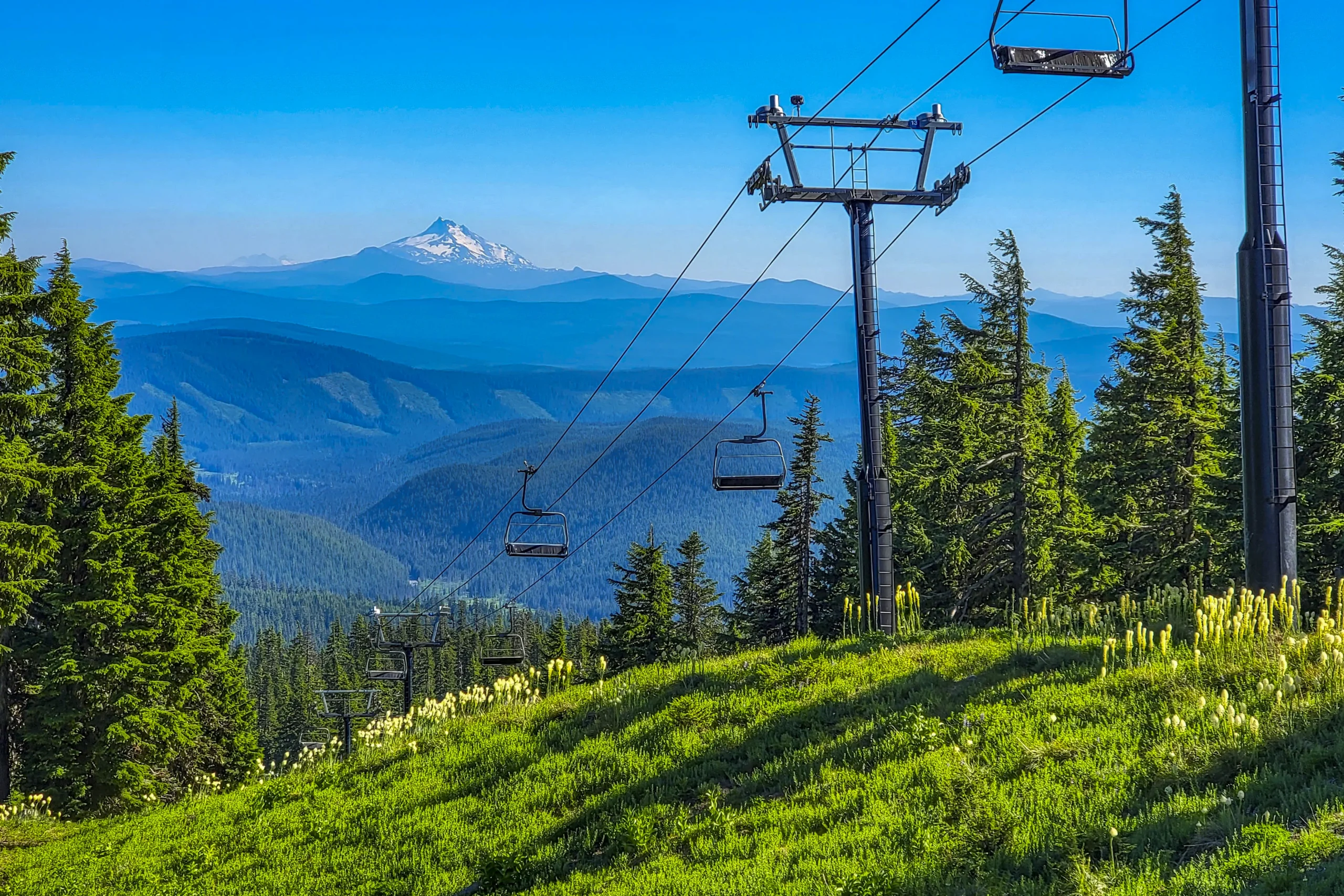
Timberline is the only place in North America with year-round lift-served skiing on natural snow. The Palmer Snowfield runs June through Labor Day, served by the Magic Mile and Palmer Express lifts, and it’s where national teams and summer race camps go when everything else has melted.
We were there on the Fourth of July watching people carry skis across a parking lot in shirtsleeves, with beargrass in full bloom on the slope below the lift. Beargrass flowers on its own irregular schedule, several years apart for any given plant, so catching a hillside of it is partly luck.
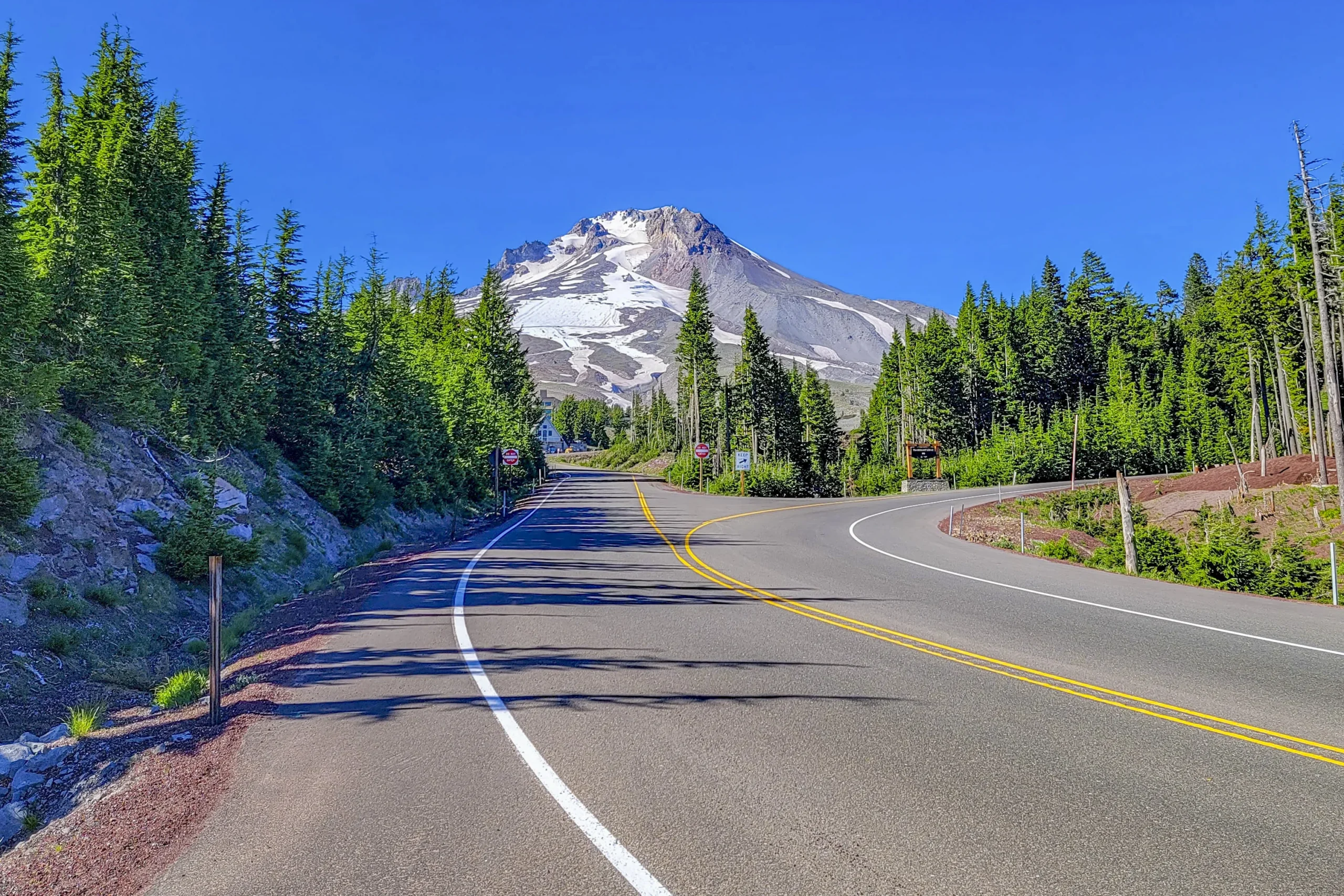
The six miles of Timberline Road are worth the drive on their own. The road climbs out of the trees and the mountain fills the windshield the whole way up.
Photography Notes
- The mountain reads differently from every side. If you’re driving the loop, stop on both the north and south sides — you effectively get two subjects.
- Afternoon light works on the south face, which is what you’re looking at from Timberline. Morning favors the Hood River Valley side.
- The lodge interior is dark and warm and mixes daylight from small windows with incandescent fixtures. Shoot wide, brace against something, and accept the color cast — it’s part of the room.
- The newel posts want a close, low angle. Photographed from standing height they read as furniture; from lower they read as sculpture.
- Bring a long lens for Mount Jefferson. It’s forty miles out and it disappears in a wide frame.
- July has beargrass and bare rock; the classic snow-covered lodge shot is a winter photograph.
Know Before You Go
- No fee to drive the byway or visit the lodge.
- Sno-Park permit November 1 through April 30 if you park at Timberline. Free the rest of the year.
- The lodge is open to the public and welcomes day visitors. Walk in.
- 6,000 feet is high enough to notice. It can be thirty degrees cooler than Portland, and weather moves in fast.
- Timberline Road is open year round but chains or traction tires are often required in winter.
- Gas up in Hood River or Government Camp. There’s nothing on the mountain.
- The Gorge and the mountain are separate trips sharing a road. Trying to do the waterfalls and Timberline properly in one day means doing neither well.
- Summer weekends fill the Timberline lot. Arrive early or late.
Is It Worth It?
Yes, and Timberline in particular is one of the few buildings in the West worth driving to see for its own sake.
The byway gives you an 11,245-foot volcano from four different angles in a hundred miles, orchards and glaciers on the same afternoon, and a hundred-mile view south to Mount Jefferson. The lodge gives you something rarer — a Depression-era public works project that came out beautiful, still standing, still open, still free to walk into.
The honest caveats are about time and expectations. It’s a long loop with real driving. The lodge is busy in summer. And if you’re picturing the snow-buried facade from the postcards, July gives you bare volcanic rock and a parking lot.
Go for the building, stay for the mountain, and give Barlow Pass a thought on the way past. The carvings inside make more sense once you’ve crossed it.
For current road conditions, lodge hours, and lift status, visit Timberline Lodge and the Mount Hood National Forest.

0 Comments