
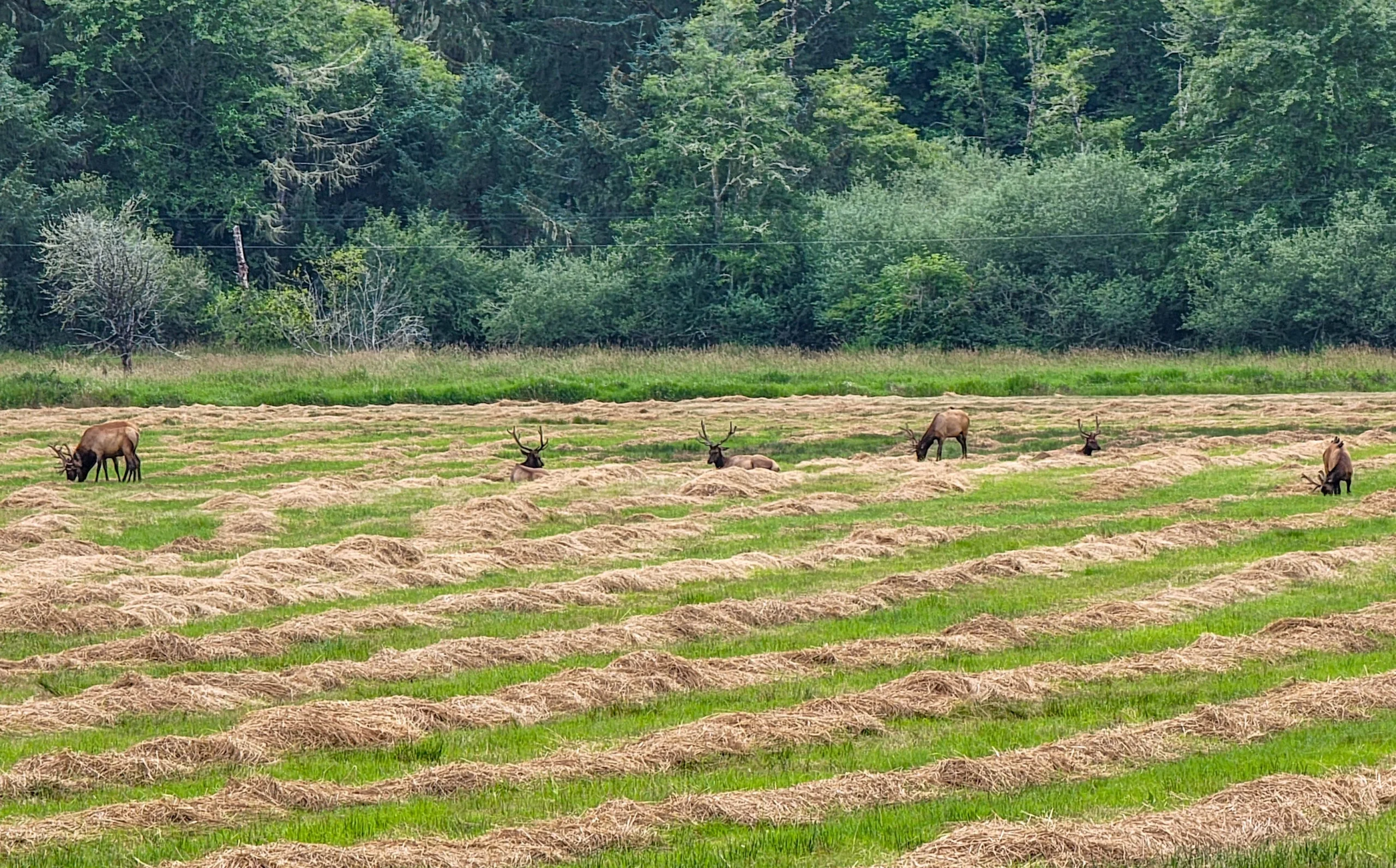

The Dean Creek Elk Viewing Area is a 1,040-acre (421 ha) stretch of pasture and wetland along Oregon Highway 38 east of Reedsport, managed to hold a year-round herd of 60 to 100 Roosevelt elk. You watch from pullouts along three miles of highway. There’s no fee, no trail, and no hike.
It is the easiest wildlife viewing on the Oregon coast, and that’s the entire point. Roosevelt elk are the largest elk subspecies in North America, bulls run over 700 pounds (318 kg), and here you can see a dozen of them from a paved pullout with your engine running.
We stopped on a July morning on the way between the coast and the Coast Range and found seven or eight bulls in a freshly mown hayfield, antlers still in velvet, most of them lying down.
The Basics
- Where: Oregon Highway 38, about 3 miles (4.8 km) east of Reedsport, along the Umpqua River
- Fee: None
- Hours: Open all the time; the pullouts are highway shoulder
- Managed by: the Bureau of Land Management, Coos Bay District, together with the Oregon Department of Fish and Wildlife
- Established: 1991
- Size: 1,040 acres — roughly 600 acres (243 ha) of woodland and 440 acres (178 ha) of wetland and grassland
- The herd: 60 to 100 Roosevelt elk, resident year round, sometimes more
- Facilities: Several pullouts, interpretive panels, restrooms, and accessible viewing platforms
- Time needed: 15 to 45 minutes
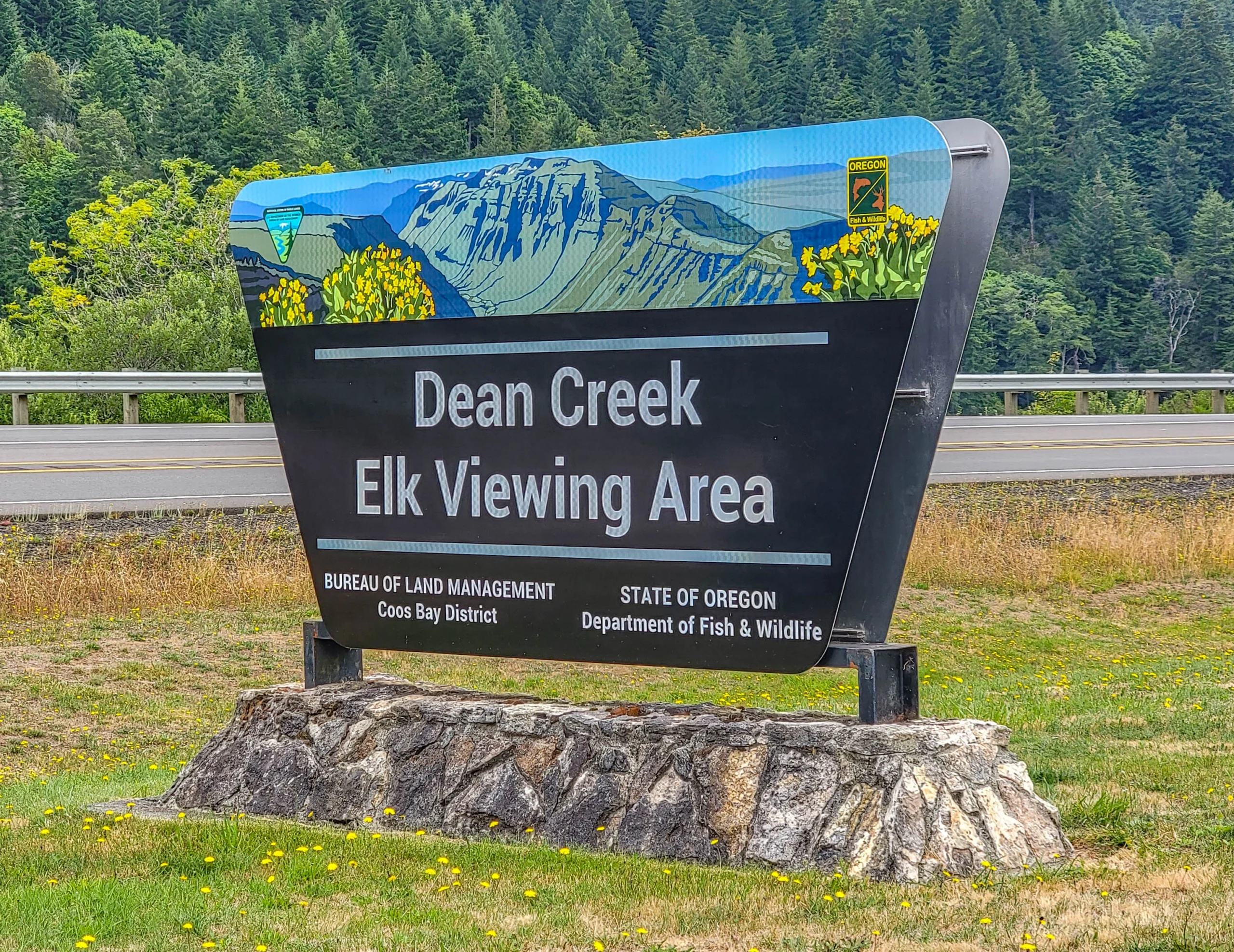
Two agencies, one meadow. The sign at the entrance carries both the BLM and ODFW logos, which is unusual enough to be worth noticing. Before 1991 this was leased pasture that local farmers grazed cattle on. The agencies took it over and now manage the fields specifically to keep elk fed and visible — mowing, flooding, and planting on a schedule built around the herd rather than a harvest.
That’s why the elk are reliably here. It isn’t luck, it’s agriculture aimed at wildlife.
What You Actually See at Dean Creek Elk Viewing Area
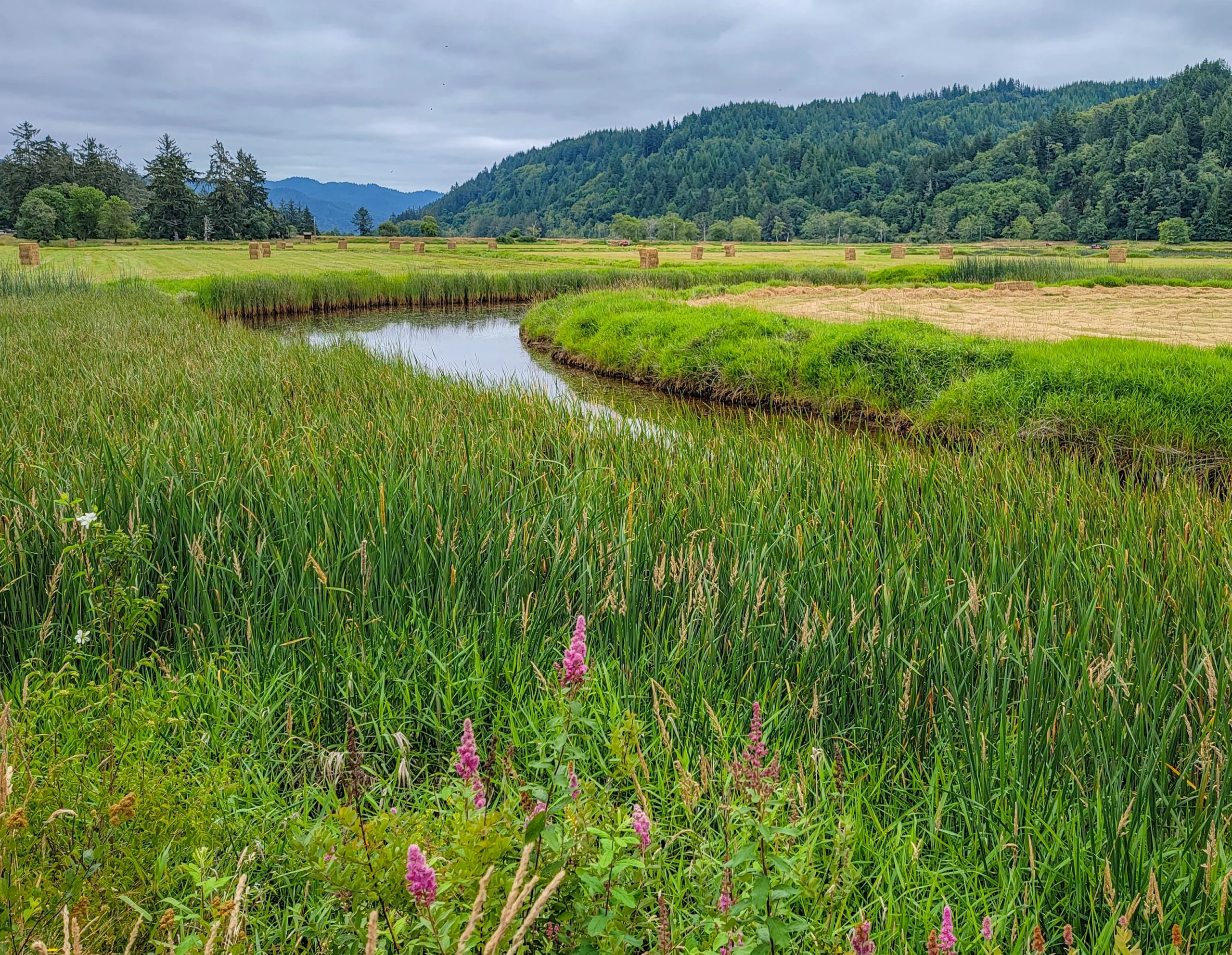
The site sits in the Umpqua River floodplain — flat bottomland with sloughs winding through it, hay meadows, and forested hills rising on both sides. It photographs better than a roadside pullout has any right to.
The elk are usually in the open fields, often lying down in the middle of the day, which is when most people drive past. In summer the bulls carry velvet antlers and the herd tends to hold together in loose groups.
Bring binoculars or a long lens. The animals are often several hundred yards out across the meadow. With the naked eye you’ll see elk-shaped brown objects; with 300mm or better you’ll see antlers.
Beyond elk, the wetlands draw herons, egrets, hawks, and waterfowl, and the sloughs hold salmon runs in season.
When to Go
- Early morning and evening are the reliable windows. Elk feed at the edges of the day and bed down in the middle.
- Fall, roughly September into October, is the rut, when bulls bugle and spar. It’s the most dramatic time to be here by a wide margin.
- Winter concentrates animals in the open fields.
- Summer is the quietest — bulls in velvet, calves with cows, a lot of lying around. That’s what we saw, and it was still worth the stop.
The elk are here every day of the year. This isn’t a seasonal migration site, which is what makes it dependable in a way that most wildlife viewing isn’t.
Photography Notes
- This is a long-lens location, full stop. Nothing under 300mm gets you a usable elk frame.
- Shoot from the pullouts, not the fence line. Approaching stresses the animals and it’s the fastest way to make them leave.
- Early and late light works with the meadow and the hills behind it.
- The landscape is worth a frame of its own. Sloughs, hay rows, and forested ridges make a better wide shot than the elk do.
- Overcast helps with brown animals against pale mown grass, which blows out easily in sun.
Know Before You Go
- Stay in the pullouts and off the pasture. The fields are closed to entry — it’s habitat, not a park.
- Never approach elk. They’re wild, they’re large, and bulls in the fall rut are genuinely dangerous.
- Highway 38 moves fast. Pull fully off and watch for logging trucks.
- No fee, no permit — a pleasant surprise on a coast where nearly everything else needs one.
- Restrooms are available, which is more than most roadside viewing areas offer.
- It’s 3 miles from Reedsport, so combine it with the Umpqua River area rather than driving out specially.
Combine It With Winchester Bay
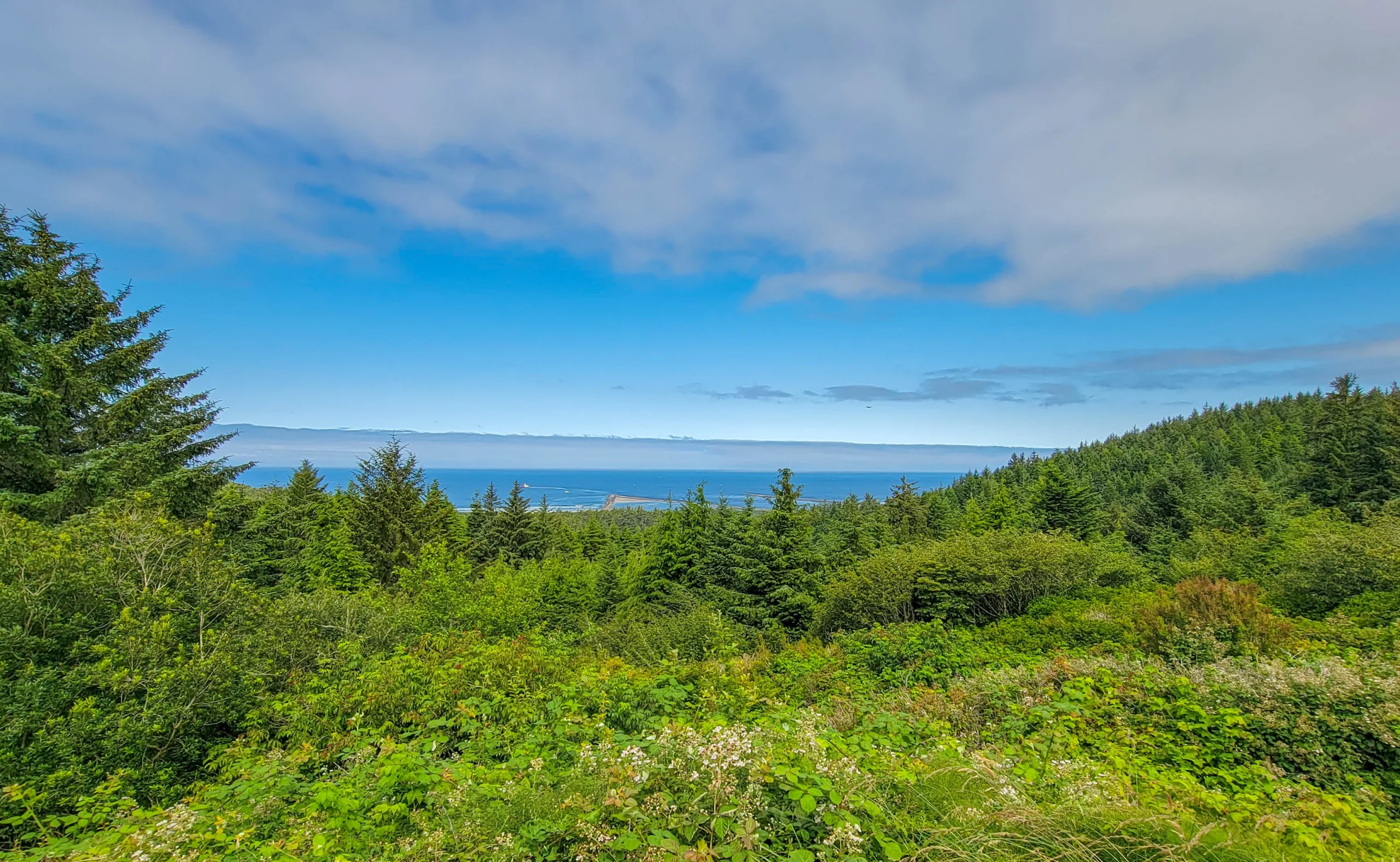
Dean Creek sits 3 miles east of Reedsport. Winchester Bay is 5 miles south, and between them they make a straightforward morning.
- The whale watching platform sits across from the Umpqua River Lighthouse, with interpretive displays and mounted scopes trained on the river mouth and the jetties. Gray whales pass south from December through February and north from March through May. We stopped here first, at 10:32 in the morning, half an hour before the elk.
- Umpqua Lighthouse State Park is a 110-acre (45 ha) park with camping, Lake Marie, and a half-mile trail around the lake. The lighthouse was built in 1894 and marks the mouth of the Umpqua. Summer tours start at the old Coast Guard facility, built in 1939, which now houses Douglas County’s coastal visitor center.
- Discovery Drive is the local scenic loop, turning off Highway 101 and winding through the state park, along the Umpqua’s south shore, and past Salmon Harbor Marina into Winchester Bay.
- The Oregon Dunes National Recreation Area runs north from here — 31,500 acres (12,750 ha) of shifting sand.
Roughly two hours covers all of it if you’re not hiking, and it’s a much better pairing than driving inland the same day. The waterfalls east of Coos Bay are an hour and a half away by road, which we found out the hard way.
Is It Worth It?
Yes, and it costs you almost nothing.
Dean Creek Elk Viewing area gives you a guaranteed look at the largest elk in North America, free, from a paved pullout, three miles off Highway 101. There is no other wildlife site on the Oregon coast with that hit rate. If you’re driving 101 anywhere near Reedsport, the detour is fifteen minutes.
The honest caveat is that it’s a roadside stop and not a destination. You will not hike, you will not get close, and in the middle of a summer day you’ll mostly watch elk sleep. Go early or late, bring a long lens, and come in the fall if you want the version with the bugling.
For current information, visit the Bureau of Land Management page for Dean Creek Elk Viewing Area and the Oregon Department of Fish and Wildlife visitors’ guide.

0 Comments